
The Six Tastes (Rasa) and How They Shape a Meal
Ayurveda’s six-taste framework for balanced meals, what taste science confirms today, and a simple way to include all six.
Taste as a Guide
Long before nutrition labels, Ayurveda used taste as a practical guide to what a food does in the body. The idea is simple: notice which tastes are on your plate, and which are missing.
The Traditional View
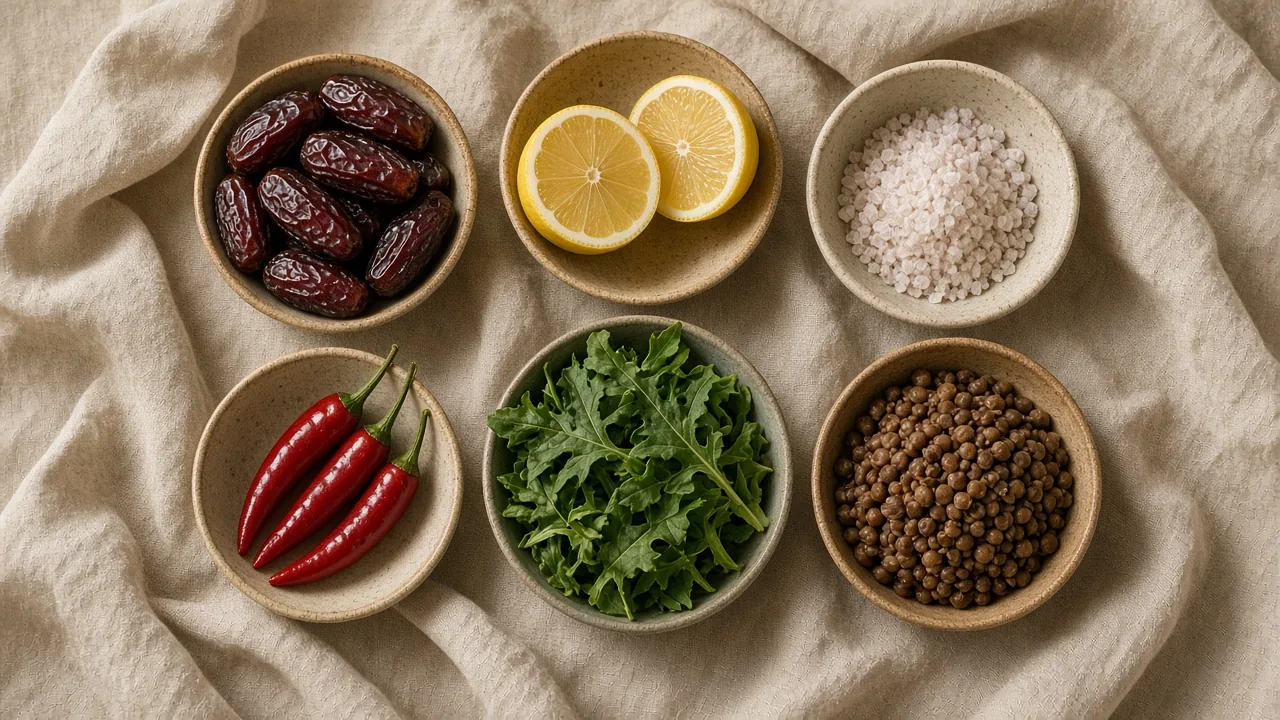
Classical texts name six tastes: sweet, sour, salty, pungent, bitter and astringent. Each is traditionally said to have its own effects. Sweet is described as nourishing and soothing; sour as stimulating appetite and digestion; salty as improving relish and aiding digestion; pungent as stimulating digestion and clearing; bitter as restoring appetite and cooling; astringent as drying and firming.
Tastes are also traditionally used to balance constitution. Vata is said to be calmed by sweet, sour and salty, and aggravated by pungent, bitter and astringent. Pitta is calmed by sweet, bitter and astringent, and aggravated by pungent, sour and salty. Kapha is calmed by pungent, bitter and astringent, and aggravated by sweet, sour and salty.
The texts are equally clear about excess: relying on any single taste too heavily is said to cause specific problems, from heaviness and poor appetite (too much sweet) to dryness and depletion (too much bitter or astringent). The overall teaching is that habitual use of all the tastes together is the best promoter of strength, while leaning on one taste is a leading cause of weakness.
What Studies Show
Modern taste science recognises five basic tastes: sweet, sour, salty, bitter and umami, with pungency and astringency classed as sensations rather than true tastes. The two systems overlap considerably but aren’t identical. Taste receptors have also been found well beyond the tongue, in the stomach and intestines, though researchers note this evidence mostly comes from laboratory studies and a direct link to a food’s effects in people hasn’t been shown. Separately, large dietary surveys have found that people eating a wider variety of plant foods tend to have more diverse gut microbes, an observational finding that fits a preference for variety, though it doesn’t prove cause. Public health guidance to limit salt and added sugar also lines up with the classical caution against too much salty or sweet taste, for different reasons.
How to Try It
Aim to include a little of each taste in your main meal:
- Sweet: cooked grains, root vegetables or ripe fruit, with a little oil or ghee.
- Sour: a squeeze of lemon or a spoon of yogurt.
- Salty: a pinch of salt in the cooking.
- Pungent: fresh ginger, black pepper or a little garlic.
- Bitter: a handful of bitter greens or some broccoli.
- Astringent: a cup of green tea, or tart, slightly unripe fruit.
Then tilt the balance to how you feel: lean on sweet, sour and salty when dry or scattered; sweet, bitter and astringent when hot or irritable; and pungent, bitter and astringent when heavy or sluggish. Notice which taste you reach for most often, as that’s traditionally the one to ease back on.