
Gentle Remedies for Bloating and Gas
Occasional bloating is common; Ayurveda and modern gut advice overlap more than they first appear. Here are traditional digestive habits, what studies actually show about ginger, cumin and fennel, and a short list of gentle steps — with clear limits.
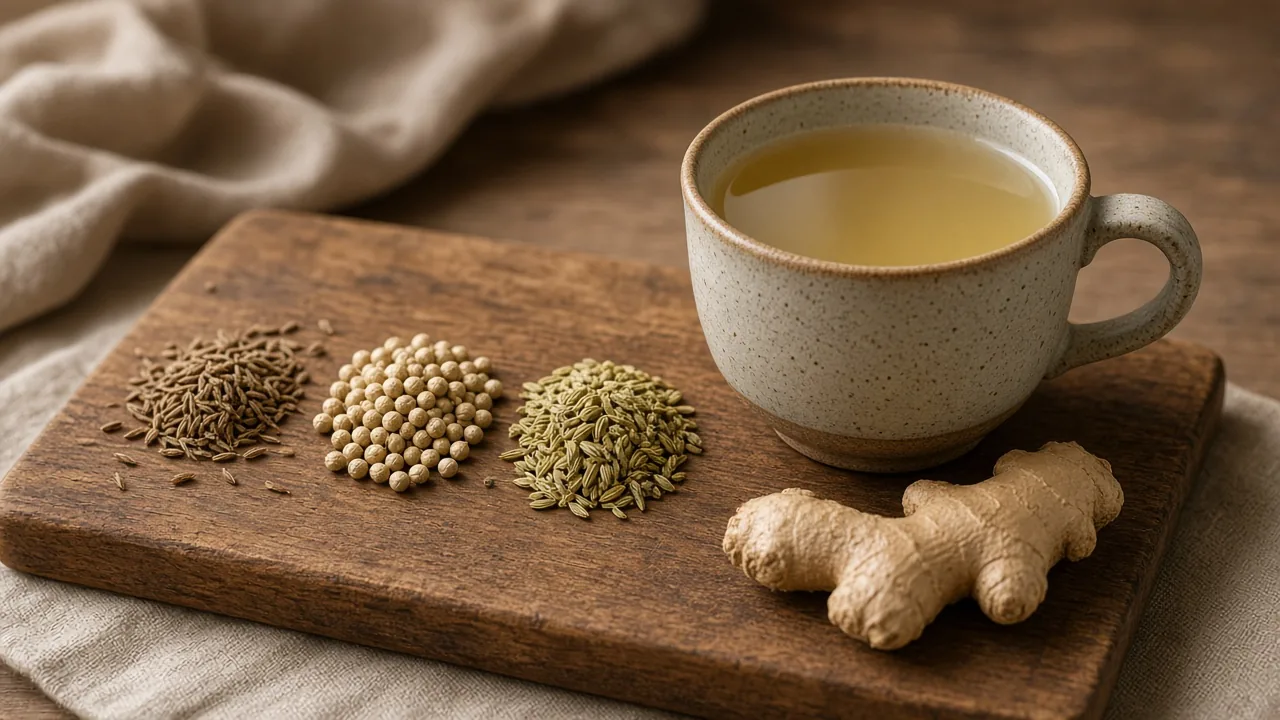
A swollen, gassy belly after meals is one of the most common everyday complaints. Ayurveda usually reads it as a sign that agni (digestive fire) is irregular or that food was hard to process; modern medicine looks at swallowed air, fermentable carbohydrates, fat load, lactose, and conditions such as IBS. Both traditions start with habits before strong remedies.
The traditional view
Classical texts put digestion at the centre of daily health. Charaka teaches eating warm, freshly cooked, slightly unctuous food in the right amount, only after the previous meal has been digested, and without rushing. Overeating is named among the causes of ama (undigested residue); irregular meals are linked with irregular agni.
For gas-prone foods such as legumes, the tradition is practical rather than avoidant:
- •Soak pulses, cook them thoroughly, and temper them with fat and digestive spices (cumin, ginger, black pepper, hing / asafoetida) rather than eating them plain and dry.
- •Ginger taken in small amounts before or with meals appears in later Ayurvedic and related dietary literature as an appetiser and digestion aid.
- •Cumin, coriander, fennel and hing are repeatedly described as culinary carminatives — foods and spices that traditionally help wind move rather than sit.
The classical message is not "never eat beans." It is: prepare them well, spice them, keep the portion matched to your appetite, and notice what your own digestion tolerates.
What studies show
Evidence is mixed and often uses extracts rather than kitchen pinches:
- •Ginger. Small randomised crossover trials found that 1.2 g ginger capsules sped gastric emptying in healthy volunteers and in people with functional dyspepsia, without always improving symptoms. A larger trial of ginger plus artichoke extracts in functional dyspepsia reported improvements including bloating versus placebo. NCCIH notes that culinary ginger differs from studied supplements and that ginger can cause heartburn or mouth irritation in some people.
- •Cumin. A triple-blind randomised trial after abdominal surgery found cumin extract capsules associated with earlier gas passage and less bloating versus placebo in that post-operative setting. That is not the same as everyday home bloating, but it supports cumin's traditional carminative reputation cautiously.
- •Fennel. A double-blind randomised trial after caesarean birth compared fennel capsules with dimethicone for flatulence; fennel performed similarly in that surgical context. Evidence for fennel tea in everyday IBS bloating remains limited; during a strict low-FODMAP elimination phase, fennel tea is often restricted.
- •Combined spice formulas. A herbal capsule combining ajwain, ginger and black pepper improved functional bloating versus placebo and dimethicone in one randomised trial. Promising, but brand- and dose-specific.
- •Diet pattern matters more than one spice. NIDDK advises slower eating, less gum/straws/fizzy drinks, and attention to common gas-forming carbohydrates (beans, some vegetables, lactose, sugar alcohols). High-fat meals can increase bloating for some people. A short, guided low-FODMAP trial may help IBS symptoms, then foods are reintroduced.
- •Simethicone and medical care. Over-the-counter anti-foaming agents are sometimes used for gas; evidence is stronger in combination products for IBS pain/bloating than as a cure-all. They do not replace evaluation when red-flag symptoms appear.
How to try it: gentle steps
- Slow down and reduce swallowed air. Sit to eat, chew well, limit straws, gum and carbonated drinks.
- Keep fat modest when you are already bloated. A teaspoon of ghee or oil in cooking is different from a heavy fried meal.
- Prepare legumes the classical way: soak, discard soaking water, cook until soft, temper with cumin, ginger and a pinch of hing if you use it.
- Try a kitchen-dose spice habit for a week: thin fresh ginger tea, or cumin/coriander/fennel tea after meals, in culinary amounts — not megadose capsules — unless a clinician suggests otherwise.
- Keep a two-week food-and-symptom note. Patterns (lactose, beans, sugar-free sweets, large late dinners) often matter more than any single remedy.
- Seek care if symptoms are persistent, severe or accompanied by red flags (see safety note).