
Morning Dinacharya Basics: A Gentle Daily Start
Ayurveda's dinacharya is a daily rhythm, not a productivity hack. Here is the classical morning sequence in plain language, where modern circadian research overlaps, and five small habits you can try without overhauling your life.
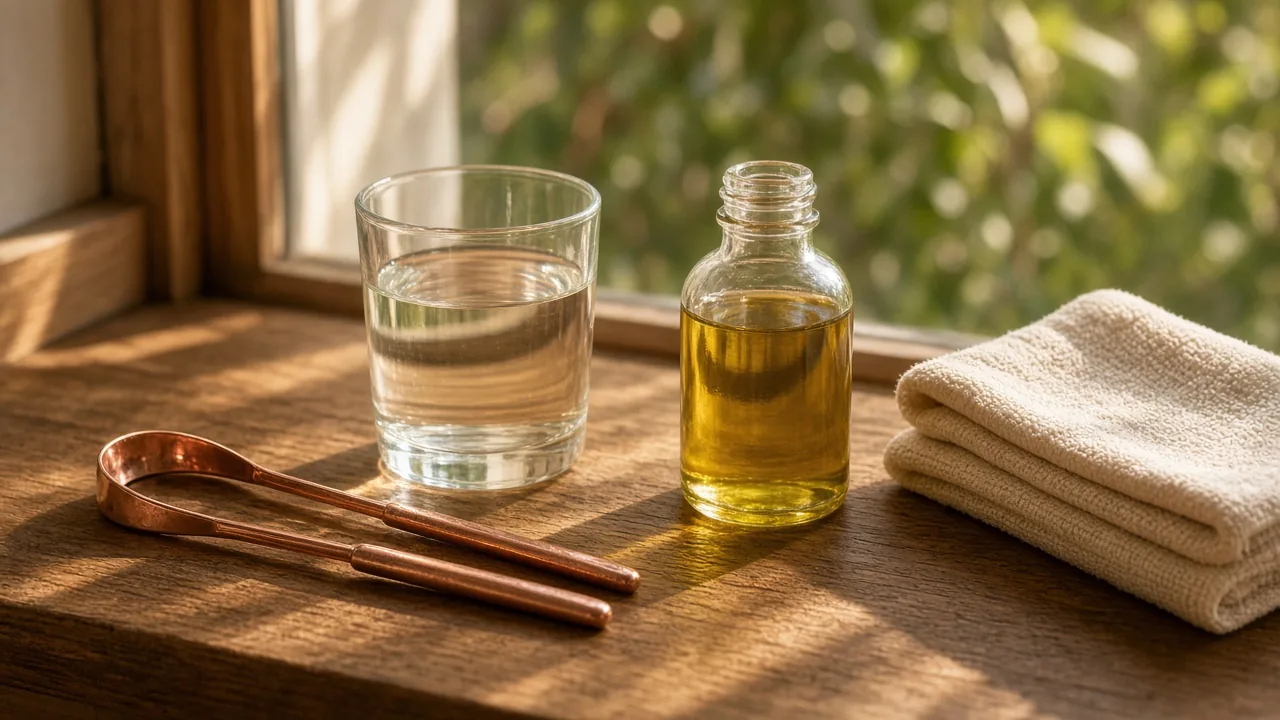
Classical Ayurveda treats the day itself as medicine. The word dinacharya means daily regimen: a repeatable sequence meant to protect health over years, not to squeeze more tasks into the morning.
The traditional view
The Ashtanga Hridaya opens its chapter on daily regimen with a clear first step: the healthy person should rise in brahma muhurta — classically the last watch before dawn, often described as roughly the final 48 minutes before sunrise — in order to protect life (raksha artham ayushah). The verse is conditional: it addresses the svastha, the healthy person. The ill, depleted or recovering are not asked to cut sleep to meet an alarm.
After rising, the classical sequence is steady rather than dramatic:
- Attend to elimination (sharira-chinta) and basic cleansing (shaucha).
- Clean the teeth (dantadhavana).
- Care for the senses in simple ways described in the texts (eye care, optional nasal oiling, mouth care) — these are specialised practices; beginners need not do every item on day one.
- Oil massage (abhyanga) when appropriate.
- Moderate exercise (vyayama).
- Bath (snana).
- Then the day's work, with sadvritta (good conduct) running through speech and company.
Charaka's wider prevention framework adds the same spirit: daily and seasonal routines, dietetic rules and conduct are chosen with constitution, strength, age, season and any existing disease in mind — not as a rigid checklist for everyone.
Two traditional emphases matter for modern readers:
- •Preservation, not hustle. The classical purpose clause is protection of life, not "getting ahead".
- •Evening sets up morning. A pre-dawn rise only works if the previous night allowed enough sleep; the texts treat sleep as one of the three supporting pillars of life.
What studies show
Dinacharya as a whole package has not been tested in large randomised trials. Research can only speak to pieces of the routine:
- •Regular sleep–wake timing and morning light. NIH materials on the sleep/wake cycle and circadian rhythm disorders emphasise consistent schedules and appropriately timed light as basic supports for circadian alignment. This overlaps with the traditional preference for a stable morning anchor, without proving that brahma muhurta specifically is required.
- •Sleep timing and health associations. Large cohort analyses link sleep timing (not only duration) with long-term outcomes; one 2024 analysis reported that both very early and very late sleep midpoints were associated with higher mortality risk compared with mid-range timing. That finding argues for adequate, regular sleep — not for forcing the earliest possible alarm.
- •Morning light and cortisol / alertness. Controlled light-exposure research shows that bright light can acutely affect cortisol and alertness pathways; findings depend on timing, intensity and protocol. Useful as a rationale for morning daylight, not as a prescription for 10,000-lux lamps at 4 a.m.
- •Oil massage and stress/sleep. Small studies of daily oil massage (abhyanga-style self-massage) have reported reductions in perceived stress and sleep disturbance over about two weeks, but samples are modest and methods vary. Treat this as preliminary, not definitive.
How to try it: five small habits
- Fix bedtime first. Choose a wake time you can keep most days, then count 7–8 hours backwards. Without that, early rising becomes sleep debt.
- On waking, pause before the phone. Elimination, water, face and mouth care — then screens. This mirrors the classical "body first" order without needing the full classical toolkit.
- Get outdoor light in the first hour when you can. A short walk or stand-by-the-window moment supports circadian cues better than scrolling in the dark.
- Try a short warm-oil self-massage 2–3 mornings a week (sesame for Vata-leaning dryness; lighter sunflower if you run hot), then bathe. Skip if skin is broken or irritated.
- Keep movement gentle before breakfast — stretch, walk, or a few sun salutations — and save hard training for later if that suits you.
Start with one or two habits for two weeks. Consistency matters more than a perfect 4 a.m. schedule.