
Building and Maintaining Your Digestive Fire (Agni)
How Ayurveda’s concept of agni, digestive fire, is traditionally kept steady, and what modern research says about related habits.
What Is Agni?
Ayurveda places digestion at the centre of health. Its classical texts describe agni, or digestive fire, as the force that turns food into nourishment. When agni works well, you feel hungry at mealtimes and light afterwards. When it falters, the tradition says food is only partly digested, leaving behind a heavy residue called ama.
The Traditional View
Classical texts describe jatharagni, the digestive fire of the stomach and small intestine, in four states: balanced (steady appetite, comfortable digestion), irregular (unpredictable hunger), sharp (intense hunger, fast digestion) and slow (little appetite, sluggish digestion).
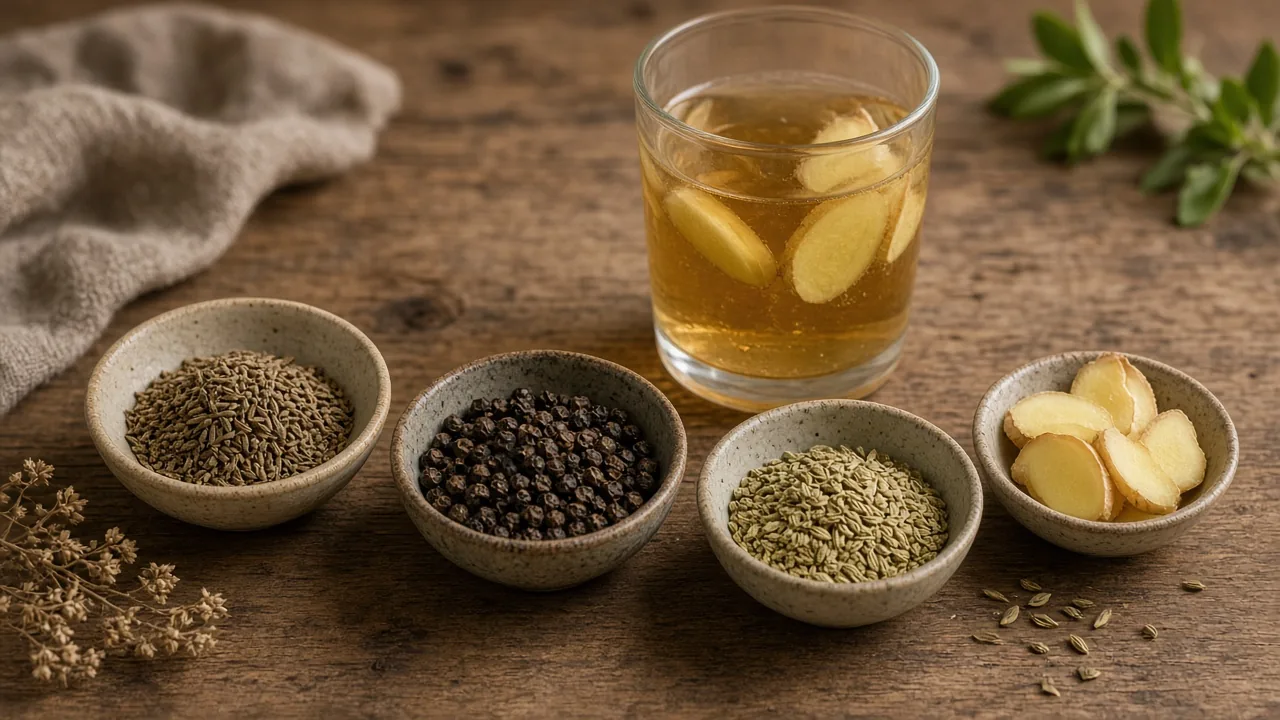
Rather than telling you to stimulate agni with ever-stronger measures, the texts emphasise how and when you eat. Eating according to your digestive capacity is traditionally named the best way to kindle agni, and eating at a proper, regular time is named the best habit for health, while irregular meals and overeating are named as causes of trouble. The guidance also suggests eating only once the previous meal is digested, filling roughly a third of the stomach with solid food, a third with liquid, and leaving a third empty. Warm, freshly cooked, slightly oily food is traditionally said to digest well. Two further customs are fresh ginger with a pinch of rock salt before a meal, traditionally used to stimulate appetite and digestion, and making lunch the main meal since midday is traditionally linked with heat and transformation.
What Studies Show
Agni itself isn’t a concept modern science can test directly, but individual related habits have been studied. Small trials suggest ginger taken before a meal can speed stomach emptying, though they didn’t find a change in symptoms, and used ginger capsules rather than fresh ginger. Laboratory research has found that blood sugar response to an identical meal was higher in the evening than in the morning, which fits the idea of eating more earlier in the day. A review linking irregular meal patterns to cardiometabolic risk found some supporting evidence, though it remains limited. Separately, an observational study found eating dinner close to bedtime was associated with higher odds of reflux symptoms compared with leaving a longer gap.
How to Try It
- Eat when you’re genuinely hungry, at roughly the same times each day.
- Make lunch your main meal when you can, keep dinner lighter, and leave a few hours between dinner and sleep.
- Stop when comfortably satisfied, before you’re full.
- Choose warm, freshly cooked food with a little healthy fat.
- If your appetite is low, try a thin slice of fresh ginger with a pinch of salt before your main meal, unless you’re prone to heartburn.
For a week, note when you feel hungry and how you feel after meals. A pattern, whether steady, irregular, sharp or slow, will likely emerge, pointing you toward the habits that help most.